
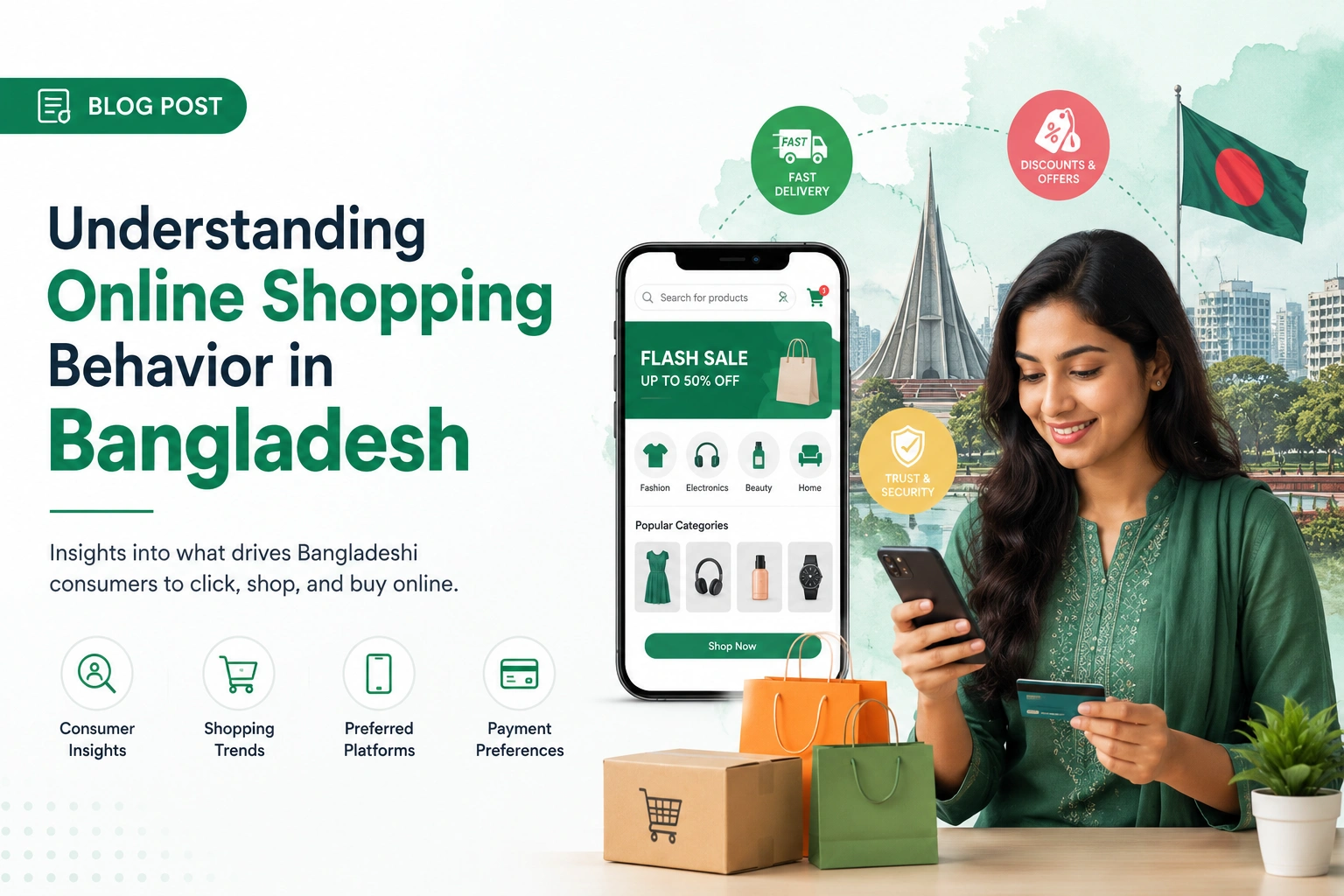
If you think Bangladeshi consumers buy products after seeing one Facebook ad, congratulations, you have never sold anything in Bangladesh. Online Shopping Behavior in Bangladesh is less like shopping and more like conducting a criminal investigation.
A typical buyer will:
- See the product on Facebook
- Check the price on 7 different pages
- Ask 3 friends
- Ask one cousin who lives abroad, because apparently, he knows everything
- Read comments from random people named “MD Sumon Official”
- Check if Cash on Delivery is available
- Then maybe buy it
- Then tell 15 other people whether it was good or bad
Welcome to the Bangladeshi buying journey.
Discovery: Facebook Is the Shopping Mall, the Newspaper, and the Marketplace
In many countries, people discover products through Google. In Bangladesh? Facebook is basically the unofficial Ministry of Commerce.
Around 60 million Bangladeshis use Facebook. Many businesses don’t even bother building a website. Why spend money on a website when customers are already living inside Facebook?
A typical seller’s business model:
- Create a Facebook page
- Post product photos
- Wait for inbox messages
- Negotiate price in Messenger
- Arrange delivery
- Repeat until Eid season arrives and chaos begins
This is why social commerce is huge here. People like talking before buying. The chat itself becomes part of the shopping experience.
Price: The National Hobby in Online Shopping Behavior in Bangladesh
If there were an Olympic event for comparing prices, Bangladesh would send a gold-medal team every year.
Research shows 79% of Bangladeshis shop online mainly because prices are lower.
But “lower” is not enough.
The buyer wants:
- Lower than Daraz
- Lower than the local shop
- Lower than the cousin’s recommendation
- Lower than yesterday’s price
- Preferably lower than what his friend paid six months ago
A Bangladeshi buyer rarely sees one price and says, “Sounds good.” That sentence almost doesn’t exist in the market.
Price checking is not optional in Online Shopping Behavior in Bangladesh. It’s a cultural ritual.
Trust: Because Bangladesh Has Been Through Some Things
Here’s the biggest reason online shopping grows slower than social media use:
People remember the e-commerce disasters.
A few years ago, several platforms collected money, failed to deliver products, and disappeared faster than your mobile balance after buying internet data.
As a result, many buyers think:
“Brother, product first, money later.”
That’s why Cash on Delivery remains king. It’s not just a payment method. It’s a trust test.
The customer is basically saying:
“I’ll believe you when the delivery guy is standing at my door.”
Harsh? Yes. Understandable? Also yes.
Family Influence: Ads Are Cute, But Mom Has the Final Vote
One of the most unique facts of Online Shopping Behavior in Bangladesh is family influence. Studies consistently show that friends and family influence buying decisions more than advertisements. Think about it.
You spend 50,000 taka on Facebook ads.
The customer’s mother says:
“This brand isn’t good. Your uncle bought one and had problems.”
Congratulations, your marketing budget just lost a fight to one family conversation.
In Bangladesh, buying decisions often involve:
- Parents
- Spouse
- Siblings
- Relatives
- Friends
- Sometimes the entire neighbourhood committee, if it’s a wedding, purchases.
The customer is rarely buying alone. The customer is buying with a committee.
Eid Season: When Budget Plans Go on Vacation
During normal months, people compare every taka.
During Eid? Different story.
Suddenly, the same person who spent two hours comparing prices says:
“Give me the premium one.”
Because Eid shopping isn’t only about need.
It’s about:
- Family expectations
- Social status
- Looking good in photos
- Meeting relatives who haven’t seen you all year
- Avoiding the sentence: “This year’s outfit looks a bit simple.”
Online Shopping Behavior and Online sales often change dramatically during Ramadan and Eid periods. For many businesses, Eid is not a season. It’s the survival mode of the year.
Dhaka vs Rural Bangladesh: Two Different Universes
Online Shopping Behavior in Bangladesh varies from place to place. Behavior may change in two different places in a same country.
A Dhaka customer might:
- Watch reviews on YouTube
- Compare prices online
- Order through an app
- Pay with mobile banking
A rural customer might:
- Ask the local shopkeeper
- Buy from someone he already knows
- Purchase on informal credit
- Value relationship over convenience
Same country, completely different buying environment.
That’s why one marketing strategy rarely works everywhere.
The Actual Online Shopping Behavior in Bangladesh
Let’s be honest about how it usually happens.
Step 1: See the product on Facebook or TikTok
“Hmm, looks interesting.”
Step 2: Check Price
“Why is this page selling it for 500 taka more? Are they adding gold plating?”
Step 3: Ask Friends
“Anyone used this brand?”
Step 4: Read Comments
Even the comments saying “Inbox me” somehow get analysed.
Step 5: Trust Check
“Do they have a real address? A phone number? Do they reply to messages? Have they posted in the last three months?”
Step 6: Payment Check
“Cash on Delivery available?”
This question has saved many Bangladeshi consumers from many headaches.
Step 7: Final Consultation
“What do you think? Should I buy it?”
Step 8: Purchase
Finally.
Step 9: Become the New Reviewer
Now the buyer tells everyone else whether the seller was good or terrible. The cycle continues.
The Real Formula for Selling in Bangladesh
Many brands think they need fancy marketing funnels. Bangladesh’s market often responds to a simpler formula:
Visibility + Competitive Price + Trust + Social Proof = Sales
Remove visibility, people never see you. Remove competitive pricing, people compare and leave. Remove trust, people choose Cash on Delivery or avoid you completely. Remove social proof, people ask someone else for a recommendation. All four matter.
Conclusion
Bangladeshi consumers are not impulsive buyers. They are cautious buyers who become emotional buyers during festivals.
They use Facebook like a marketplace, family like a review website, and Cash on Delivery like an insurance policy.
A marketer who ignores price loses attention. A marketer who ignores trust loses the sale. A marketer who ignores word of mouth loses the market.
And if your customer says “I’ll ask my friend first,” don’t panic. That’s not a rejection. That’s Bangladesh’s version of the checkout process.
Honestly, if Bangladesh ever launches a national sport called “Comparing Prices Before Buying,” half the population already has professional-level experience.
The other half is still checking one more Facebook page before making a decision.